Robeson County has a notorious reputation as a hotbed of corruption, crime, poverty, and mistreatment of its sizable Lumbee Indian population. Robeson County’s colorful past includes a storied outlaw Indian who fought the Confederacy, a battle between Lumbees and the KKK, a takeover of the local newspaper office by Indian activists, and the murder of Michael Jordan’s father.
On a pretty spring day, I traveled to Robeson County with my friend Mia Burroughs and an open and curious mind. I’d heard tales of the place from my longtime coworker Scott Dreyer who attended Pembroke University (for seven years!) and now I was prepared to explore Robeson County for myself. Mia has become an avid birdwatcher in her retirement and the two of us planned to use birdwatching as a starting point for our explorations.
As we drove through the small and picturesque town of Red Springs on our way to Pembroke, we came upon the unexpected sight of an old, impressive school building with a sign telling us we were looking at the campus of historic Flora MacDonald Academy. Being devotees of the time travel series Outlander, Mia and I knew that Flora MacDonald was a Scottish heroine who lived briefly in North Carolina in the 18th century. Naturally we wanted to check out the place that bore her name! We wandered the scenic grounds and then entered the school building discovering, much to our surprise that this was not an abandoned building but an operating school now known as Highlander Academy.
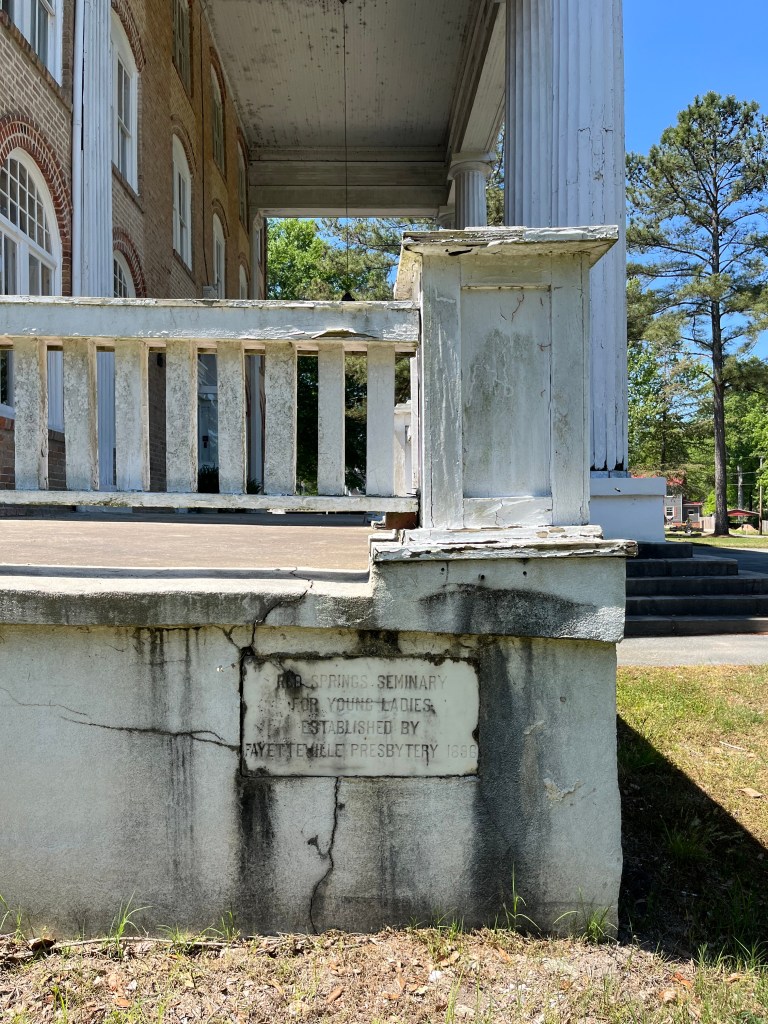
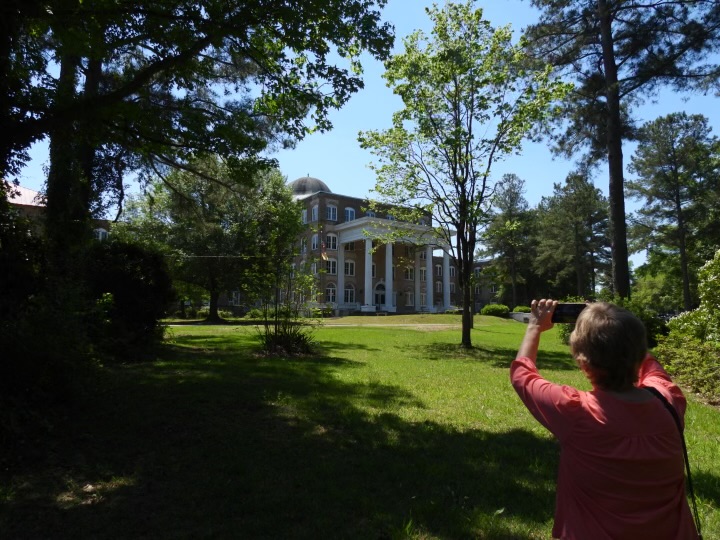
A friendly staff member welcomed us and clued us in to the history of the school which opened in 1896 as a girls’ college and was named after Flora MacDonald to honor the Scottish heritage of so many in the area. Two of MacDonald’s children were even said to be buried in the nearby woods. Mia and I found our way to their gravesite but were disappointed when research (aka Google) let us know that it’s highly unlikely these were actually MacDonald’s daughters. Still, with a past that raised as many questions as it provided answers, our foray to Flora MacDonald Academy proved fascinating.
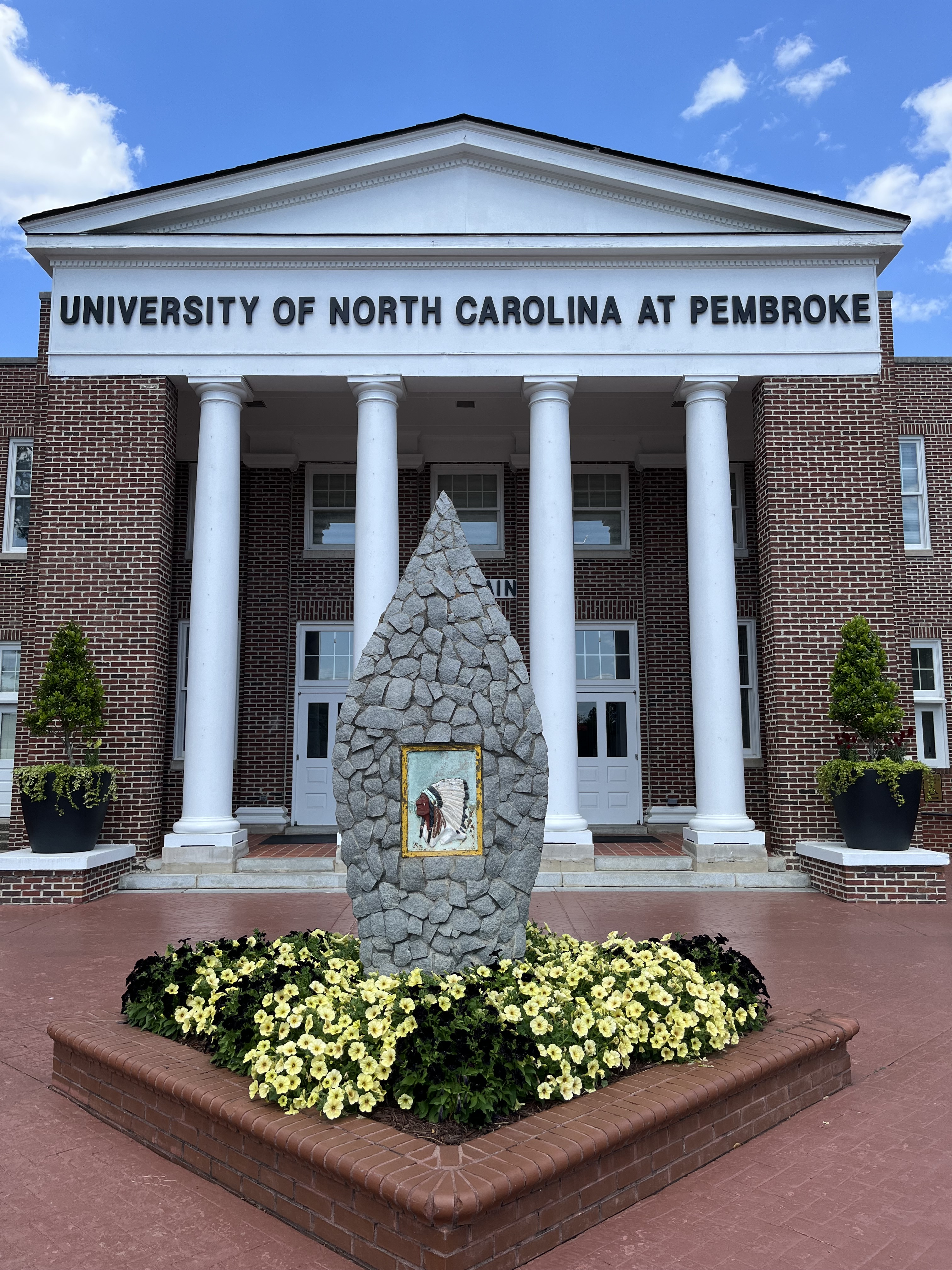
From Red Springs, it was a short jaunt to Pembroke, a school that proudly celebrates its native heritage, having originally been built at the behest of local Lumbees to train Indian teachers. Today Pembroke is one of the sixteen campuses of the University of North Carolina system. I was disappointed not to find the dorm my friend Scott had lived in while a student, but Mia and I did hear songs from a variety of birds as we walked the grounds, including pine warblers, red-bellied woodpeckers, eastern towhees, blue jays, and tufted titmice (thanks to Mia’s knowledge and her handy app for identifying those!). A stop for lunch at Slim Chickens turned out to be fortuitous because I later found the restaurant was on the exact spot where Scott had lived during his student days after moving out of his dorm. I found his place of residence after all (and the chicken was delicious)!
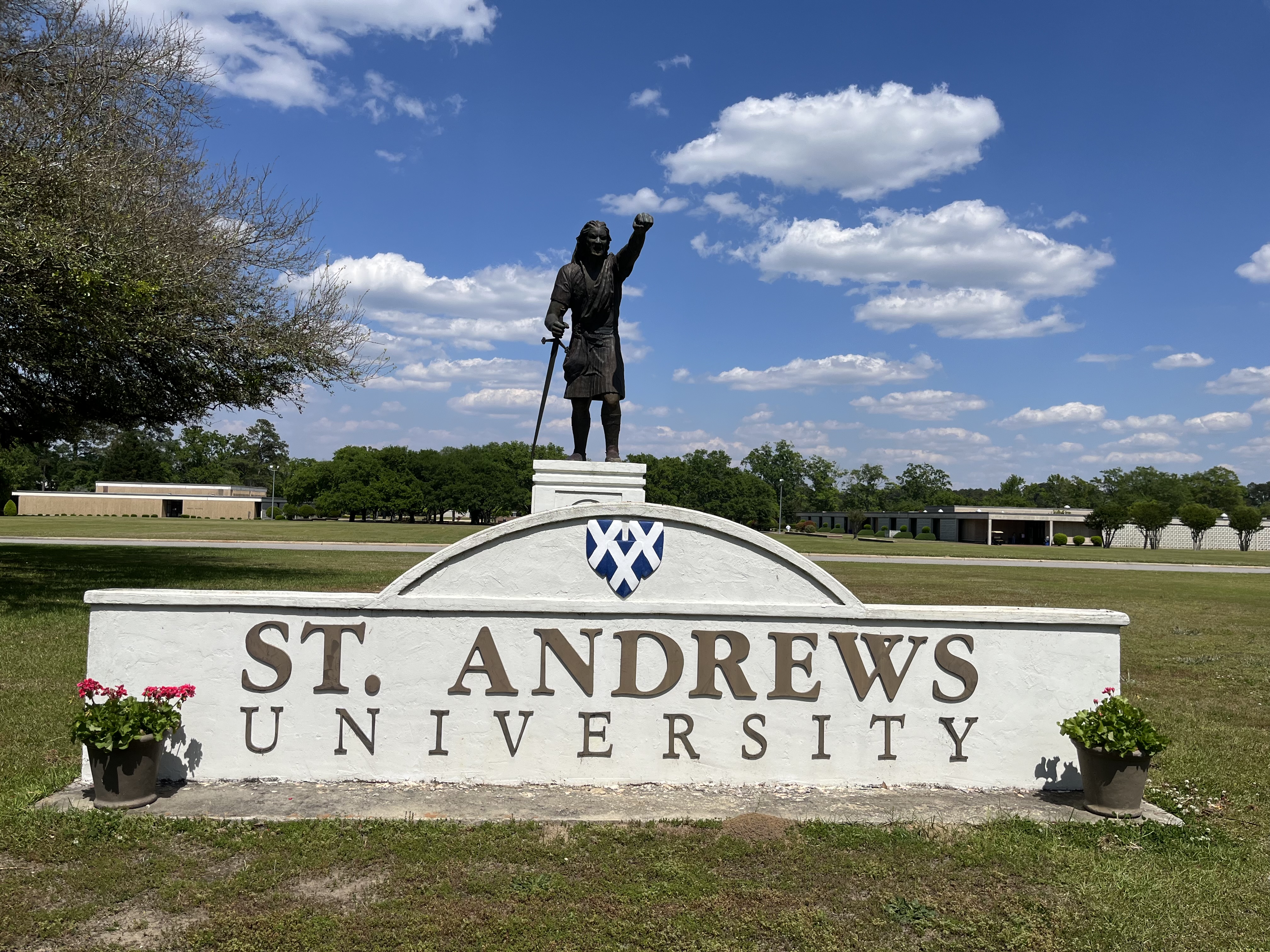
Our route home took us past Saint Andrews University in Scotland County, a Presbyterian college formed in 1959 with the merger of Presbyterian Junior College and none other than Flora MacDonald College. Unfortunately, we didn’t make it to Scotland County’s other school of higher education, Laurinburg Institute. Laurinburg Institute was created in the early 1900s to educate local Black children and holds the distinction for Tar Heel fans of graduating Carolina basketball star Charlie Scott who helped break the color barrier in UNC athletics.
For a trip where I expected to delve into the history of the Lumbee, I was surprised to find instead many examples of the area’s Scottish heritage. It was a timely reminder to embark on journeys with an open heart, prepared to celebrate whatever this diverse and unpredictable world of ours brings my way.
April 25, 2024 – County #55 and 56 – Robeson and Scotland
 100countyquest