Monthly Archives: June 2013

Take Me Out To The Ballgame

Durham is Chapel Hill’s near neighbor and a place that has a long-standing love/hate relationship with my hometown. When I was growing up, Durham was a gritty manufacturing city. Driving into its downtown to shop for back-to-school clothes, there was no doubt as to what was manufactured there as the smell of tobacco permeated the streets. When we were kids, we took field trips to Durham’s cigarette factories and received complimentary packs of four cigarettes each “to take home to our parents.”
Durham has gone through several incarnations since then and has various claims to fame – a couple of universities, a historically thriving black middle class, medical centers – and today it is considered the hip and happening place in the Triangle area, especially by its own residents. Durham boasts several venues that go by acronyms that I have a hard time keeping up with, acronyms like DBAP, DPAC, or DBAD, and I know one of those refers to the ballpark where the Durham Bulls play although I never can quite remember which one. Ever since the movie Bull Durham emerged as a cult classic, going to see the Bulls has been one of the most hip and happening things of all for a person to do in trendy Durham.
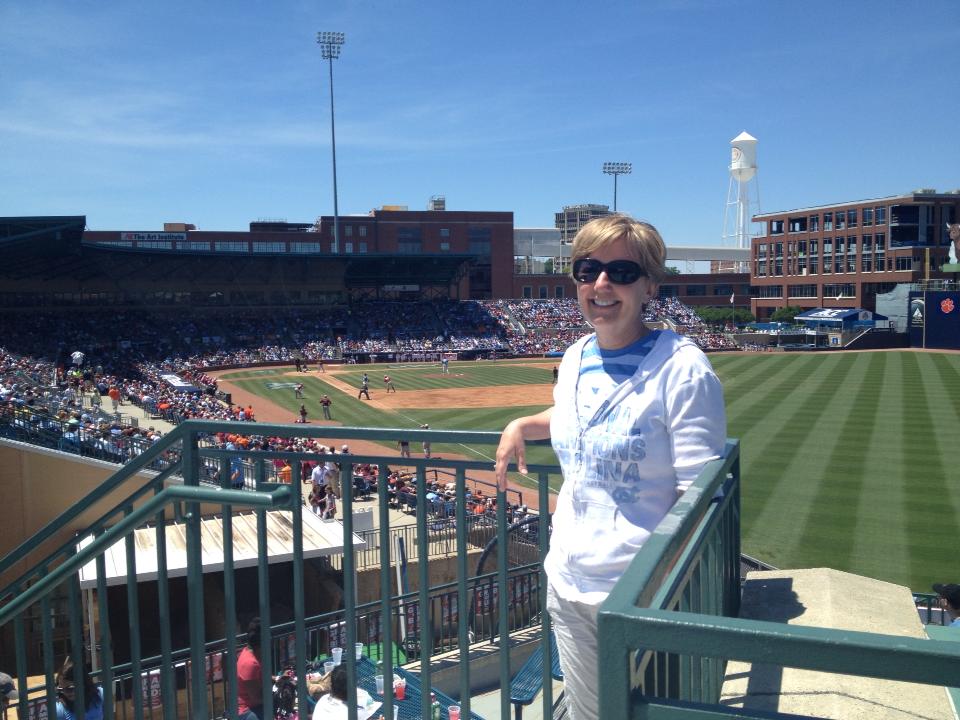
As someone who is neither particularly hip nor happening, I’ve rarely been to see the Bulls play but I do get a thrill out of watching my beloved Tar Heels win an ACC championship which means I had a big time with my daughter Katherine at the ball park in Durham on May 26th as UNC beat the Hokies of Virginia Tech to claim the ACC crown. Note the Lucky Strike tower in the background of the photo. Durham has capitalized well on its tobacco past and is enjoying its current incarnation while I am left mildly curious as to what its next one will be.
943239_10200934440430703_822382686_n

May 26, 2013, County #17 – Durham

Signs, Signs, Everywhere Signs

When I was growing up in the 1960s, my family went on several long road trips from North Carolina to my parents’ home states of Louisiana and Texas. Having come of age in the Jim Crow South, both my mom and dad were ardent supporters of the civil rights movement and those trips through the segregated South offered plenty of teachable moments for my sisters and me. One that has stuck with me for many years was a sign welcoming us to the small city of Greenville with the words “The Blackest Land, The Whitest People.” That was such blatant racism even for those times that I never was able to quite forgive the city for it. As the years went by, whenever I heard anything positive about Greenville, SC, I would think to myself self-righteously “apparently that city’s overt racism has been forgotten.”
Not long ago I met a young woman from Greenville and, knowing she was young enough to have been born long after that sign had come down, I told her about it. She was surprised to have never heard of it and then got a puzzled look on her face saying, “The weird thing about that is that the soil in Greenville isn’t black at all, it’s red clay.” That made me curious so I turned to trusty Google and, lo and behold, discovered that the infamous sign had hung in Greenville, TEXAS, not South Carolina. All my life I’d been holding those words against the wrong town!
Ku Klux Klan Billboard and Segregated Cemetery
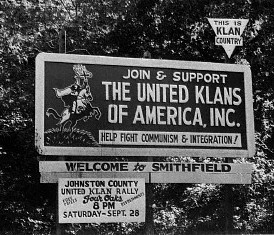
All of that brings me to my trip last weekend to the sixteenth county in my quest, Johnston, a place that was known in the middle of the last century for a shameful sign of its own. Fairly or unfairly, when I was a child, my friends and I associated Johnston County and the town of Smithfield with the hateful Klan sign that welcomed people to the town of Smithfield with the words “Help fight communism and integration!” As I grew older and came to know people from Smithfield, I also came to understand how painful that association was for them and how helpless they had felt to do anything about a sign they didn’t endorse. That sign has been gone now for many years but some of the people who erected it and some of those who opposed it must still be living in the area – that past is not, after all, so far away.
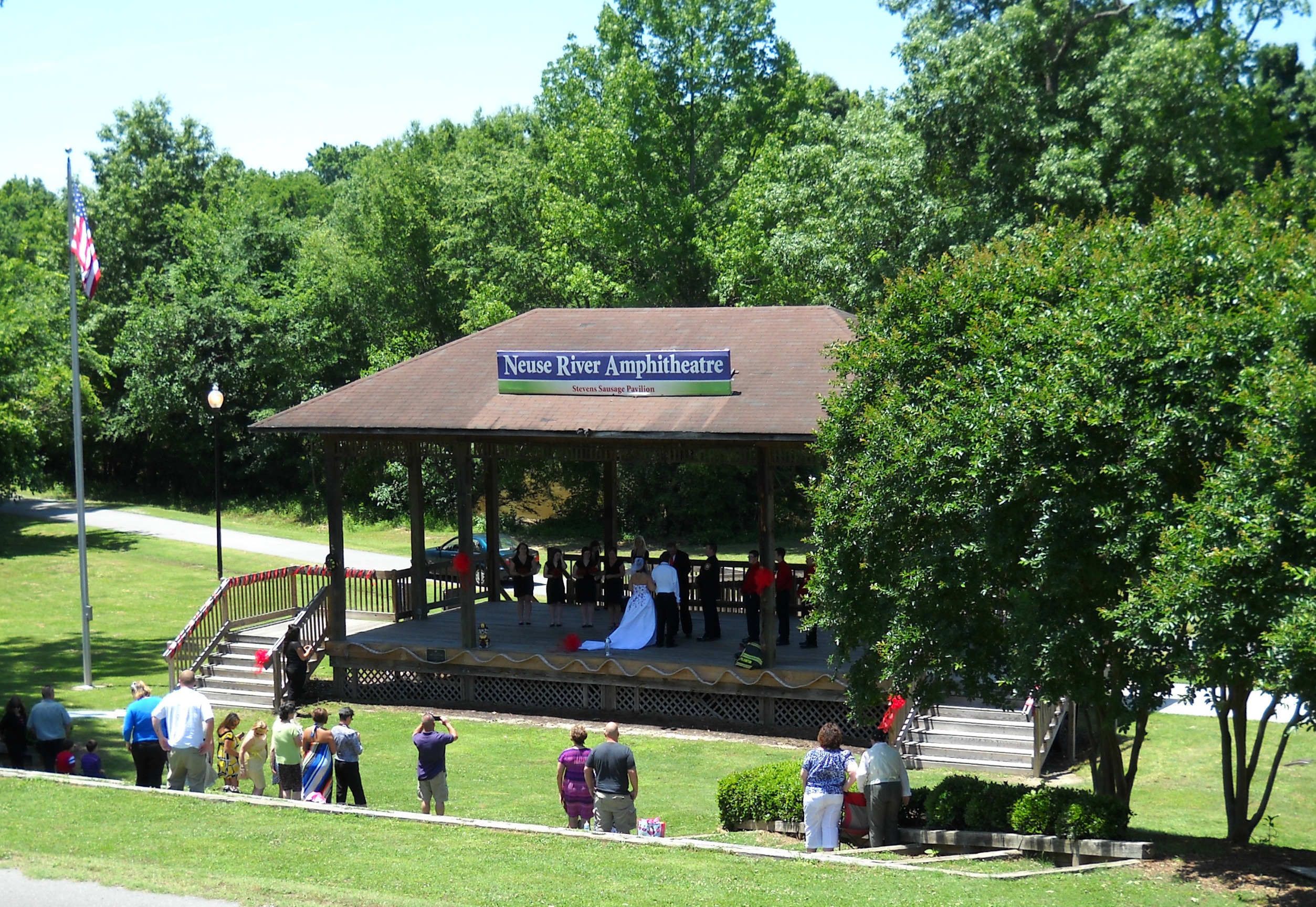
Today if you mention Smithfield, people are most likely to think not of a KKK sign but of outlet stores or Smithfield’s Chicken & BBQ. I was more interested in trying to discover what it is that makes Johnston County tick in 2013. This trip was notable because I had my favorite traveling companion of old along for the ride, my husband Ron. Unfortunately he’s not much for car rides any longer so this may have been his one and only county trip and he was not impressed. It’s true there wasn’t a lot happening in downtown Smithfield on a Saturday afternoon but I was surprised to discover an open welcome center in the original First Union building downtown, complete with exhibits and a genealogy library (as a member of the Chapel Hill Historical Society board and a Chapel Hill resident who loves my hometown, I think it’s a shame that Chapel Hill doesn’t have something similar to welcome visitors). Walking through town to the Neuse River, I was entranced to come upon a wedding in progress. Then as we drove out of town, we passed a house decorated for a birthday party and, just down the road, a burial taking place. Johnston County’s much-maligned sign from the past is long gone and in its place I saw instead signs of birth, marriage, and death, signs that life goes on. River wedding
May 25, 2013, County #16 – Johnston