 Twisting and turning on a rural mountain road that runs alongside the French Broad River, my daughter Rebecca and I were overcome with a range of emotions as we entered Madison County for the first time in almost twenty years. Except for my home county of Orange, I am more familiar with Madison County than any other in North Carolina. On both his mother and father’s side of the family, my husband Ron’s roots here date back to the 1700s. Although he was born in Detroit and only lived in Madison County for a brief time as a child, his grandparents’ farm on Bear Creek was Ron’s true home. From the time I met him in 1971 until his grandmother’s death in 1996, Ron and I made countless trips to Madison County, first as a couple and then as a family with two daughters in tow. Now Rebecca and I were back, braced for the inevitable change we were prepared to see after nearly two decades away. Instead, the surprise that awaited us was just how little had changed. One thing you can say for Madison County, it endures.
Madison County is a place of contrasts. Nature has marked it with astounding beauty and people have touched it with unrelenting ugliness. From its mountaintops, breathtaking views of sunrises stretch before you while, in the flat land along the water where people tend to live, the steep land rising from either side blocks out the sun for all but a few hours a day. In Madison County, I heard the worst sorts of racial epithets tossed casually into conversation. I learned of people who took care of their trash by dumping it into the creek that ran in front of their home. I observed a rock hard streak of passive aggression that allowed family members to live side by side without speaking for years because of perceived slights.
To survive in the remote and mountainous region of Madison County requires toughness. Well into his 90s, Ron’s grandfather walked daily up the mountain that rose behind his home to check on his cows. No matter the weather, Ron’s grandmother trudged every morning for most of the years of her life, milk pail in hand, to the barn across the creek to milk her cow. That sort of toughness breeds an uncompromising culture and, for a Chapel Hill child of the sixties like me, Madison County represented a true culture clash. I came from a world that valued kindness and compromise and met a world that viewed both with suspicion. I came to know Madison County well, well enough to understand that I would always be considered a stranger here.
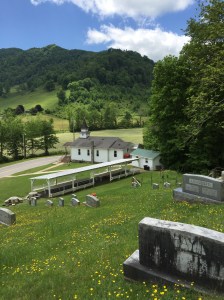
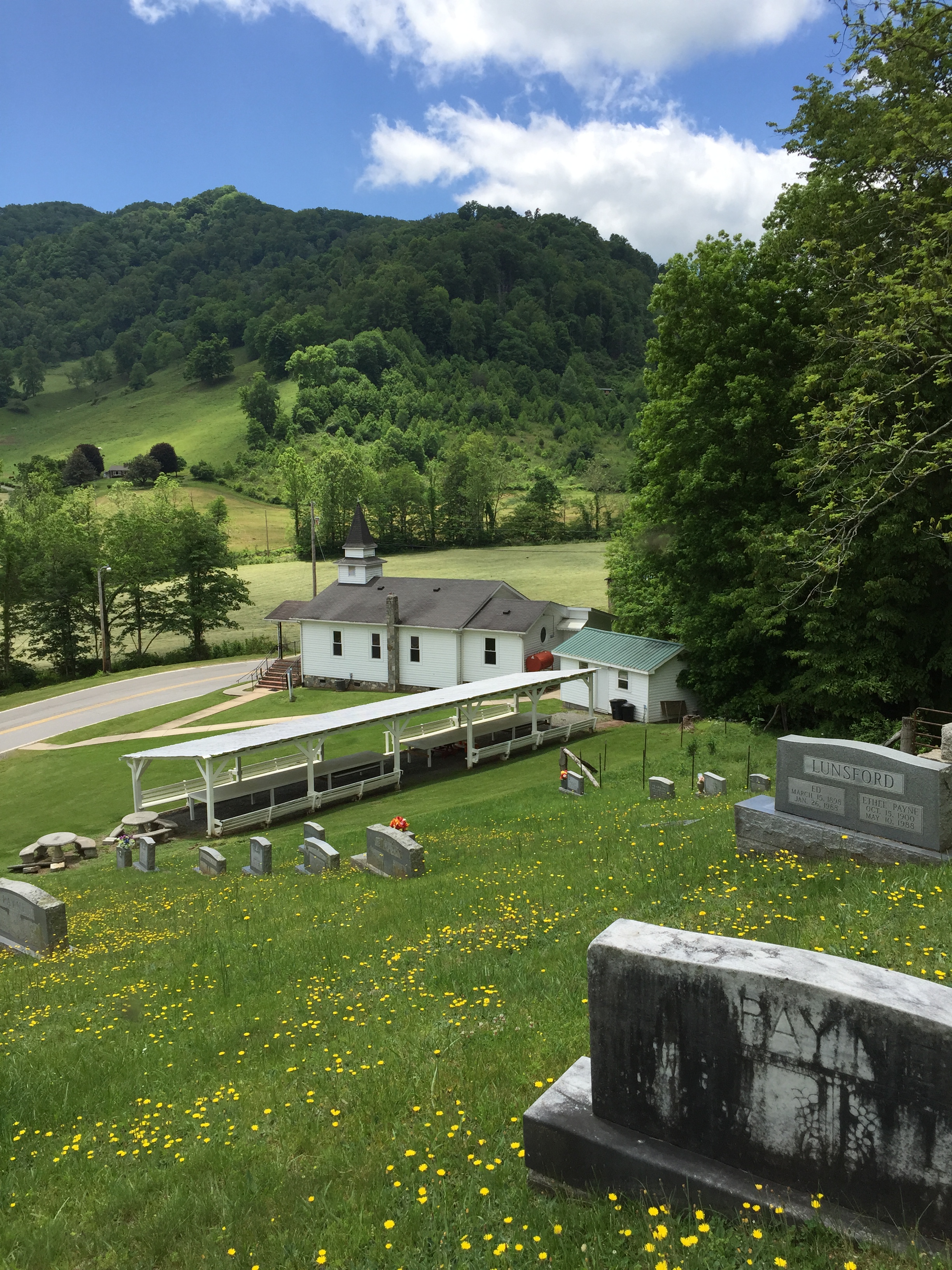
Becca and I found our way to Payne’s Chapel where Becca’s great-grandmother’s family is buried. The terrain of the cemetery is steep and, from the top, a gorgeous view of distant mountains stretched out before me. I slipped and fell coming down and wondered what it would be like to carry a coffin up that hill in wintry weather.
We headed to Freeman Gap Cemetery, on land that has been owned by Becca’s grandmother’s family for more than 200 years, near the spot where we had made numerous visits to her great-grandparents’ farm on Bear Creek. Each generation of Freemans is laid out in this cemetery, all the way back to Becca’s great-great-great-great-grandparents, Aaron Pinkney and Tempe Freeman. We visited the ancestors’ graves, including that of Seth Freeman, who left home briefly in the 1860s to fight with Stoneman’s Cavalry, was charged with desertion, and then had the charges rescinded and received a federal pension. Little in Madison County is straightforward.
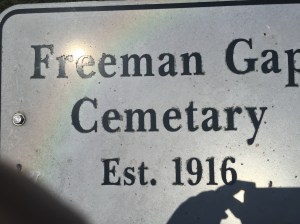
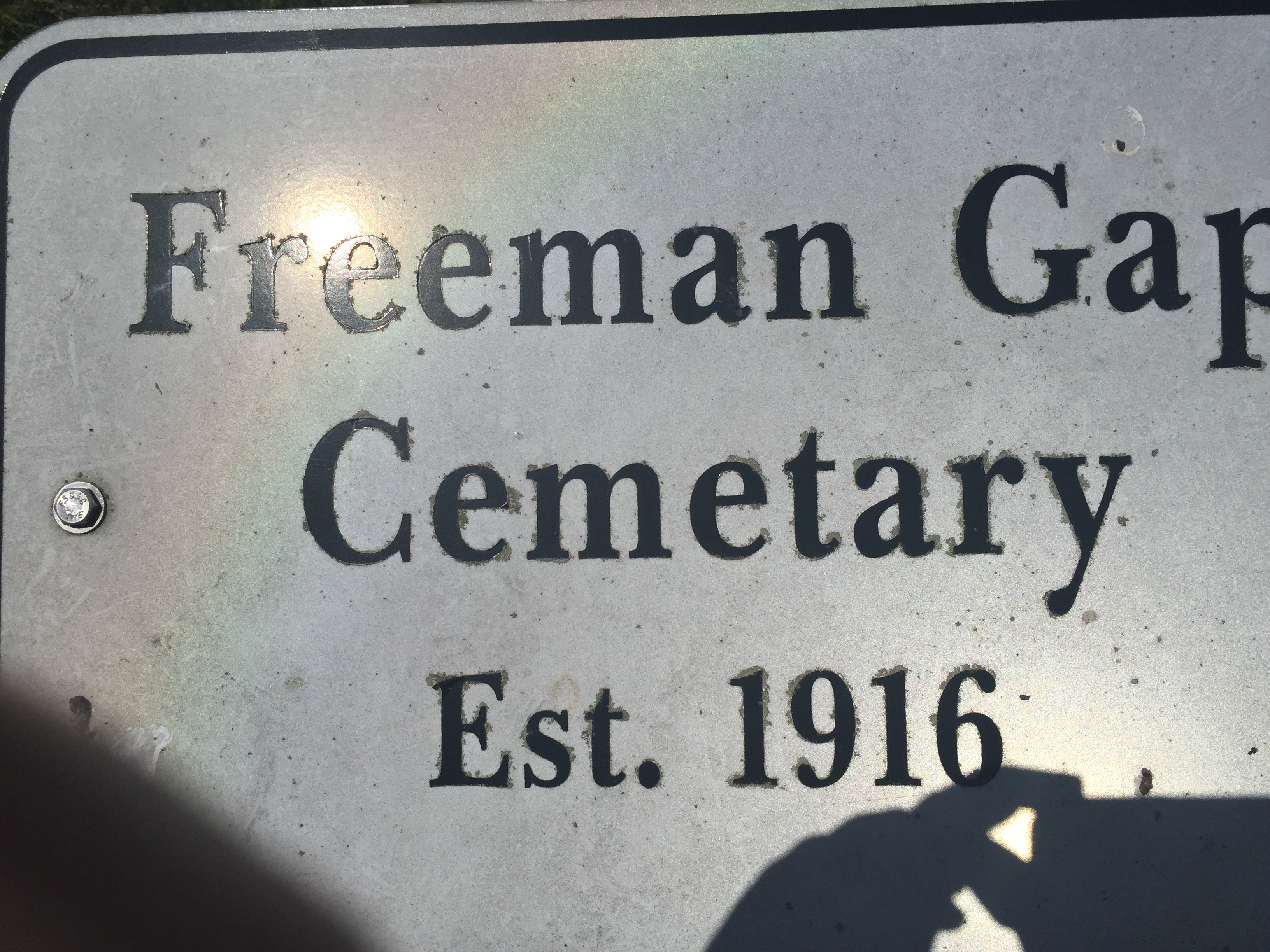
As we were leaving the cemetery, we both took out our cell phones and snapped pictures of the Freeman Gap Cemetary (sic) sign. Later, thumbing through our pictures, we saw that, unlike my perfectly ordinary snapshot, Becca’s photo had a ghostly light shimmering over it with a rainbow visible in the light. Seeing the difference in the two pictures taken at the same moment from the same spot gave us chills. Maybe it’s the New Age Chapel Hill side of us but we chose to interpret that iridescent glimmer as an embrace from the spirits of Becca’s forebears, a reminder to her that she is one of them and that, for all of her mom’s sense of alienation in Madison County, this is a place where Becca’s roots run deep.
May 21, 2015 County #24 – Madison
 100countyquest