Things that appear timeless and permanent allow the comforting illusion that there are things in this world we can absolutely count on. I remember being unsettled as a child by a book, Walter the Lazy Mouse, that told of a mouse so lazy that when his family moves away, he is forgotten and left behind. The pictures of poor Walter walking through his empty home, searching for his family and slowly coming to the realization that he’s been abandoned, are still vivid in my mind from the first time I saw them more than 60 years ago.
I experienced that same sense of uneasiness when I first learned that Wake Forest University in Winston-Salem was originally a college in the small town of Wake Forest but was lured to Winston-Salem in the 1950s by the promise of money from Winston-Salem’s prominent and wealthy Reynolds family. If there was anything I thought I could count on growing up in the college town of Chapel Hill, it was the presence of the university. Stately trees, ivy-covered old buildings, stories that were passed from generation to generation – everything about the place seemed deeply-rooted and immovable. The lesson from Wake Forest, that a whole institution could be gone from a town in a flash, left me feeling like Walter the lazy mouse, discovering that the world could change in an instant.
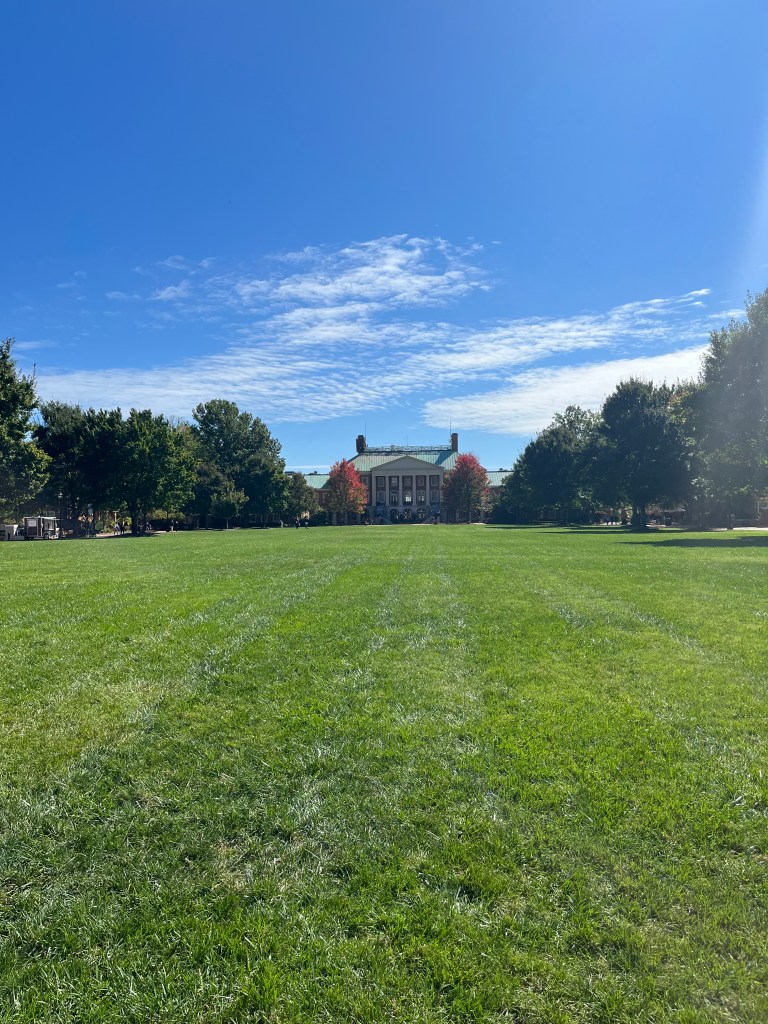
On a beautiful day in October, I made my first trip to the campus of Wake Forest University in Winston-Salem. Although it was the middle of a weekday, the pristine campus was eerily quiet with few students or other people in sight. I felt like I was on an empty movie set.
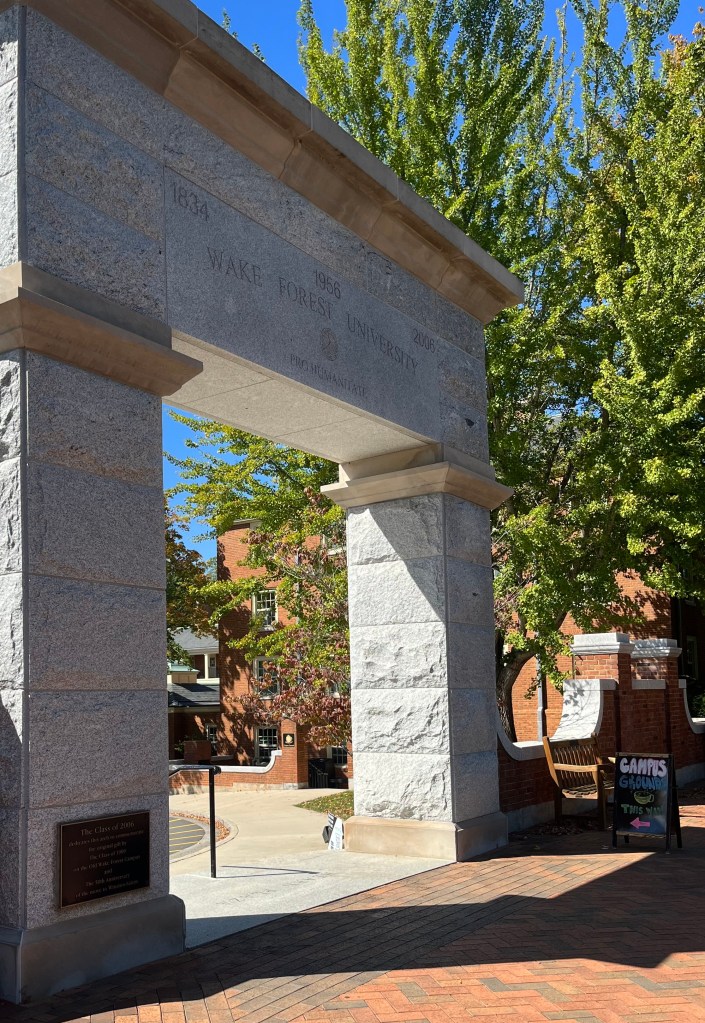
I came upon an archway that commemorates another archway on Wake’s original campus in the town of Wake Forest. I was glad to see this acknowledgement that the school originated somewhere else. Still, I was unable to shake the disconcerting sense of unreality that seemed to permeate the picture-perfect scene, probably colored by my bias that this institution was not where it originally set out to be.
October 9, 2023 – County #53 – Forsyth

