Author Archives: soupontheroad

Deep roots

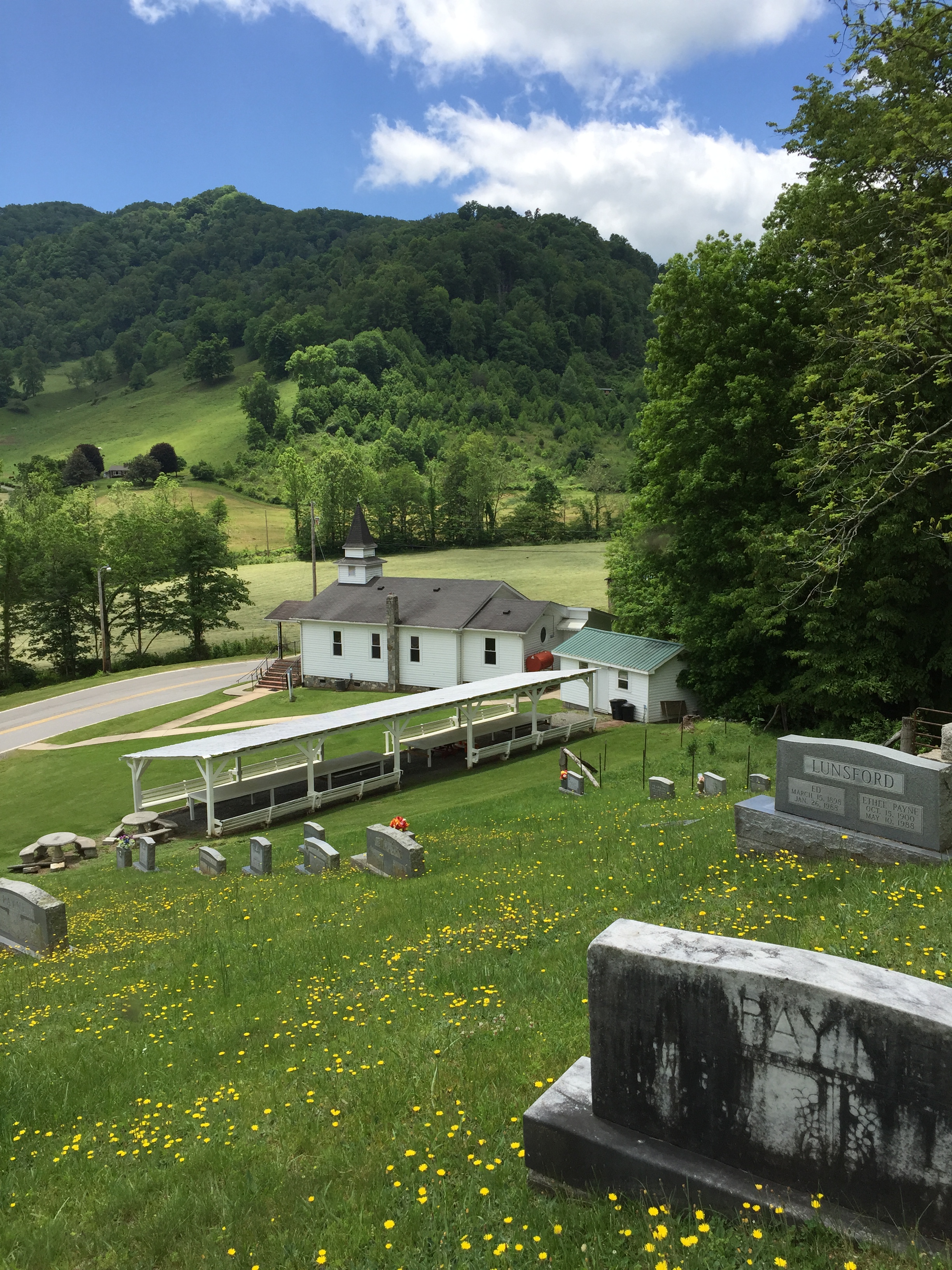
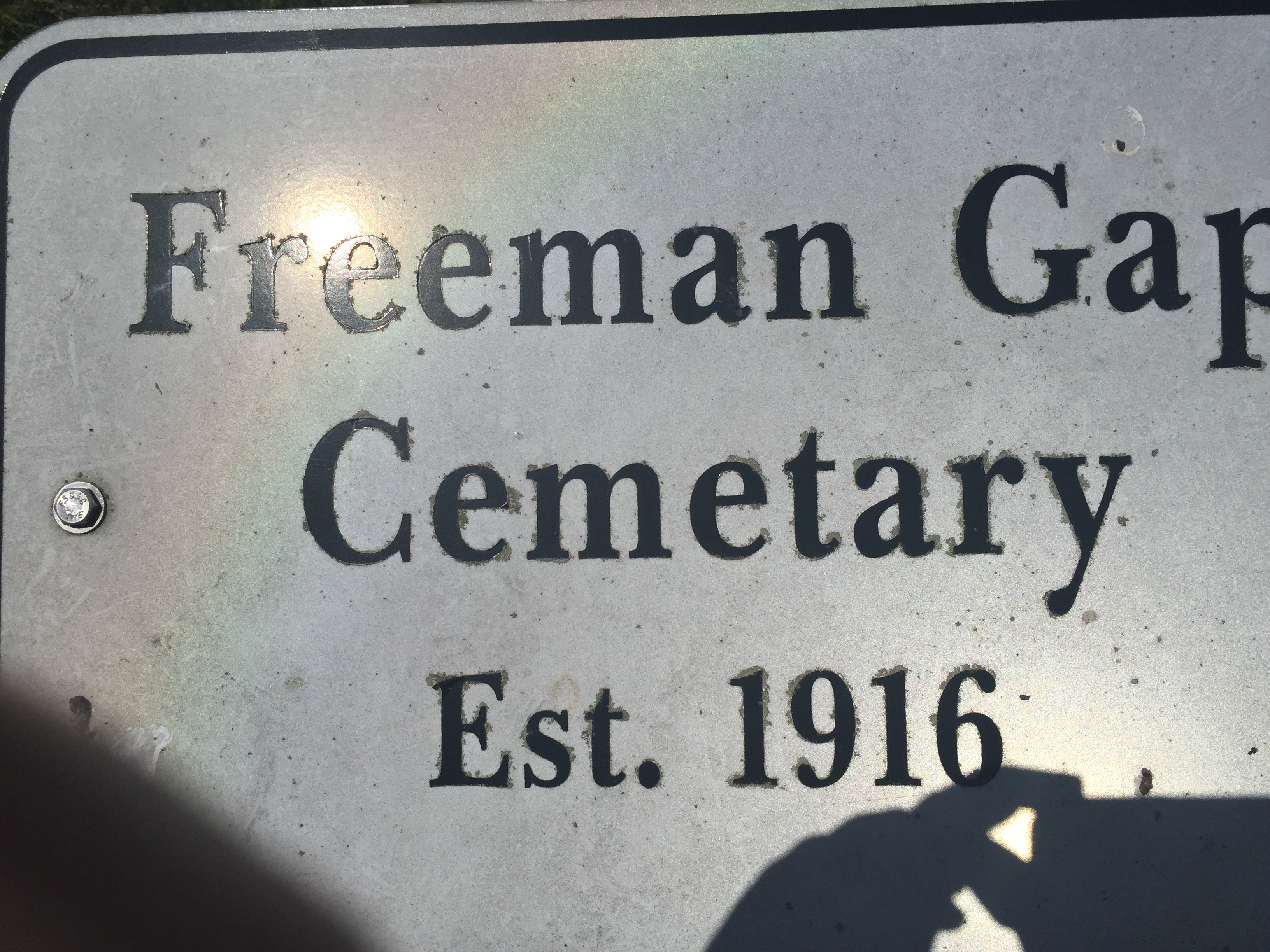
Freeman Gap Cemetery near Bear Creek. Twisting and turning on a rural mountain road that runs alongside the French Broad River, my daughter Rebecca and I were overcome with a range of emotions as we entered Madison County for the first time in almost twenty years. Except for my home county of Orange, I am more familiar with Madison County than any other in North Carolina. On both his mother and father’s side of the family, my husband Ron’s roots here date back to the 1700s. Although he was born in Detroit and only lived in Madison County for a brief time as a child, his grandparents’ farm on Bear Creek was Ron’s true home. From the time I met him in 1971 until his grandmother’s death in 1996, Ron and I made countless trips to Madison County, first as a couple and then as a family with two daughters in tow. Now Rebecca and I were back, braced for the inevitable change we were prepared to see after nearly two decades away. Instead, the surprise that awaited us was just how little had changed. One thing you can say for Madison County, it endures.
Madison County is a place of contrasts. Nature has marked it with astounding beauty and people have touched it with unrelenting ugliness. From its mountaintops, breathtaking views of sunrises stretch before you while, in the flat land along the water where people tend to live, the steep land rising from either side blocks out the sun for all but a few hours a day. In Madison County, I heard the worst sorts of racial epithets tossed casually into conversation. I learned of people who took care of their trash by dumping it into the creek that ran in front of their home. I observed a rock hard streak of passive aggression that allowed family members to live side by side without speaking for years because of perceived slights.
To survive in the remote and mountainous region of Madison County requires toughness. Well into his 90s, Ron’s grandfather walked daily up the mountain that rose behind his home to check on his cows. No matter the weather, Ron’s grandmother trudged every morning for most of the years of her life, milk pail in hand, to the barn across the creek to milk her cow. That sort of toughness breeds an uncompromising culture and, for a Chapel Hill child of the sixties like me, Madison County represented a true culture clash. I came from a world that valued kindness and compromise and met a world that viewed both with suspicion. I came to know Madison County well, well enough to understand that I would always be considered a stranger here.
Becca and I found our way to Payne’s Chapel where Becca’s great-grandmother’s family is buried. The terrain of the cemetery is steep and, from the top, a gorgeous view of distant mountains stretched out before me. I slipped and fell coming down and wondered what it would be like to carry a coffin up that hill in wintry weather.
We headed to Freeman Gap Cemetery, on land that has been owned by Becca’s grandmother’s family for more than 200 years, near the spot where we had made numerous visits to her great-grandparents’ farm on Bear Creek. Each generation of Freemans is laid out in this cemetery, all the way back to Becca’s great-great-great-great-grandparents, Aaron Pinkney and Tempe Freeman. We visited the ancestors’ graves, including that of Seth Freeman, who left home briefly in the 1860s to fight with Stoneman’s Cavalry, was charged with desertion, and then had the charges rescinded and received a federal pension. Little in Madison County is straightforward.
As we were leaving the cemetery, we both took out our cell phones and snapped pictures of the Freeman Gap Cemetary (sic) sign. Later, thumbing through our pictures, we saw that, unlike my perfectly ordinary snapshot, Becca’s photo had a ghostly light shimmering over it with a rainbow visible in the light. Seeing the difference in the two pictures taken at the same moment from the same spot gave us chills. Maybe it’s the New Age Chapel Hill side of us but we chose to interpret that iridescent glimmer as an embrace from the spirits of Becca’s forebears, a reminder to her that she is one of them and that, for all of her mom’s sense of alienation in Madison County, this is a place where Becca’s roots run deep.

IMG_0966

May 21, 2015 County #24 – Madison

It’s Beginning to Look a Lot Like Christmas

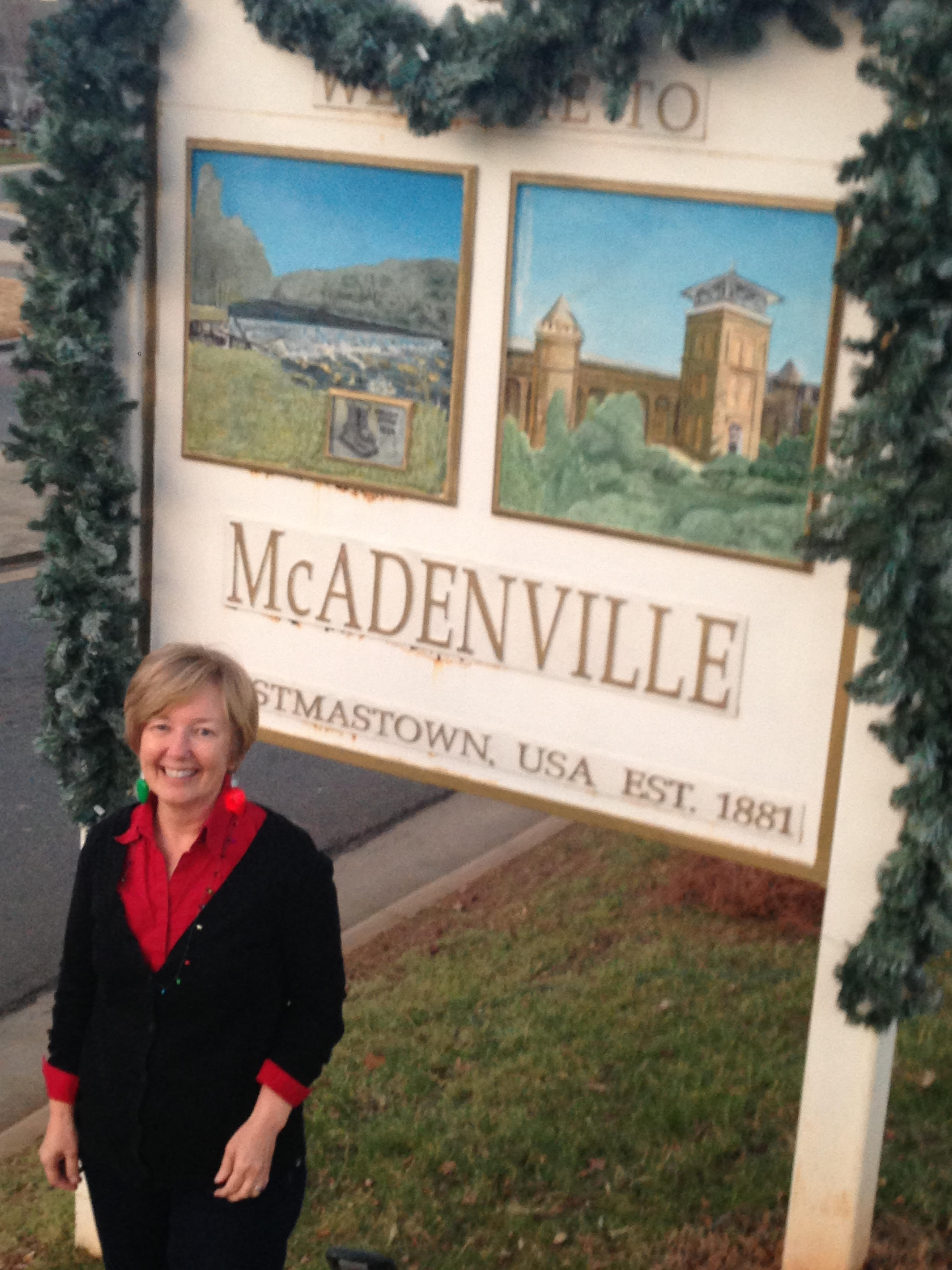
lights3There is good reason that McAdenville, NC is known as Christmastown, USA. McAdenville is a tiny mill town in Gaston County celebrated for its annual display of Christmas lights. On a recent trip there, my daughter Rebecca and I found that the best part of a visit to McAdenville is not the display of colorful lights (even though they’re plenty impressive) but of Christmas spirit! We joined the line of cars winding through the town, past houses decked out for the holidays as homeowners waved from their front porches and played carols. Church bells rang and kids in passing cars shouted “Merry Christmas!” as we drove by, adding to the general feeling of good will.

From McAdenville, Rebecca and I headed to the small college town of Davidson in Mecklenburg County for supper. Davidson’s main street looked like a Hallmark picture of a small town at Christmastime. To perfectly top off the Norman Rockwell ambiance of our day, we looked up from a delicious dinner at Toast to see the town fire truck coming down Main Street with Santa aboard waving to one and all, leaving us to conclude that this slice of the piedmont knows how to do Christmas up right!

Notice that I came prepared for all this Christmas festivity, wearing flashing Christmas tree light earrings for our journey to Christmastown.
lights11

December 18, 2014, Counties #22 and 23 – Gaston and Mecklenburg

Wintry Watauga

Hunter Elem
When fourth graders at Hunter Elementary School in Raleigh started a unit on North Carolina counties last winter, I was lucky enough to be invited to come talk with them about my quest to visit all 100 counties. It’s so heartening to see the energy and curiosity of teachers and students in a well-run public school! And it was funny for all of us to realize that, if I continue at the pace I’m going, these students will have graduated from high school by the time I visit my 100th county.

At the end of our discussion, we held a drawing to select my next destination and the winner was…drum roll…Watauga County! Nestled deep in the mountains of North Carolina, Watauga wouldn’t have been my first pick for a cold weather trip. Since it is the place where my daughter Katherine went to college, she agreed to go with me on a frigid MLK Day to see what adventures awaited us in Watauga County.

The North Carolina mountains are a world apart. For many people the beauty of those mountains is breathtaking and the distinctive culture feels like home. My husband Ron’s roots run deep in these mountains, meaning those traditions are a part of my daughters’ heritage. I myself am more a fan of sunshine and wide, open spaces and cultures that are themselves wide open and embracing. My feelings about western North Carolina are decidedly mixed.

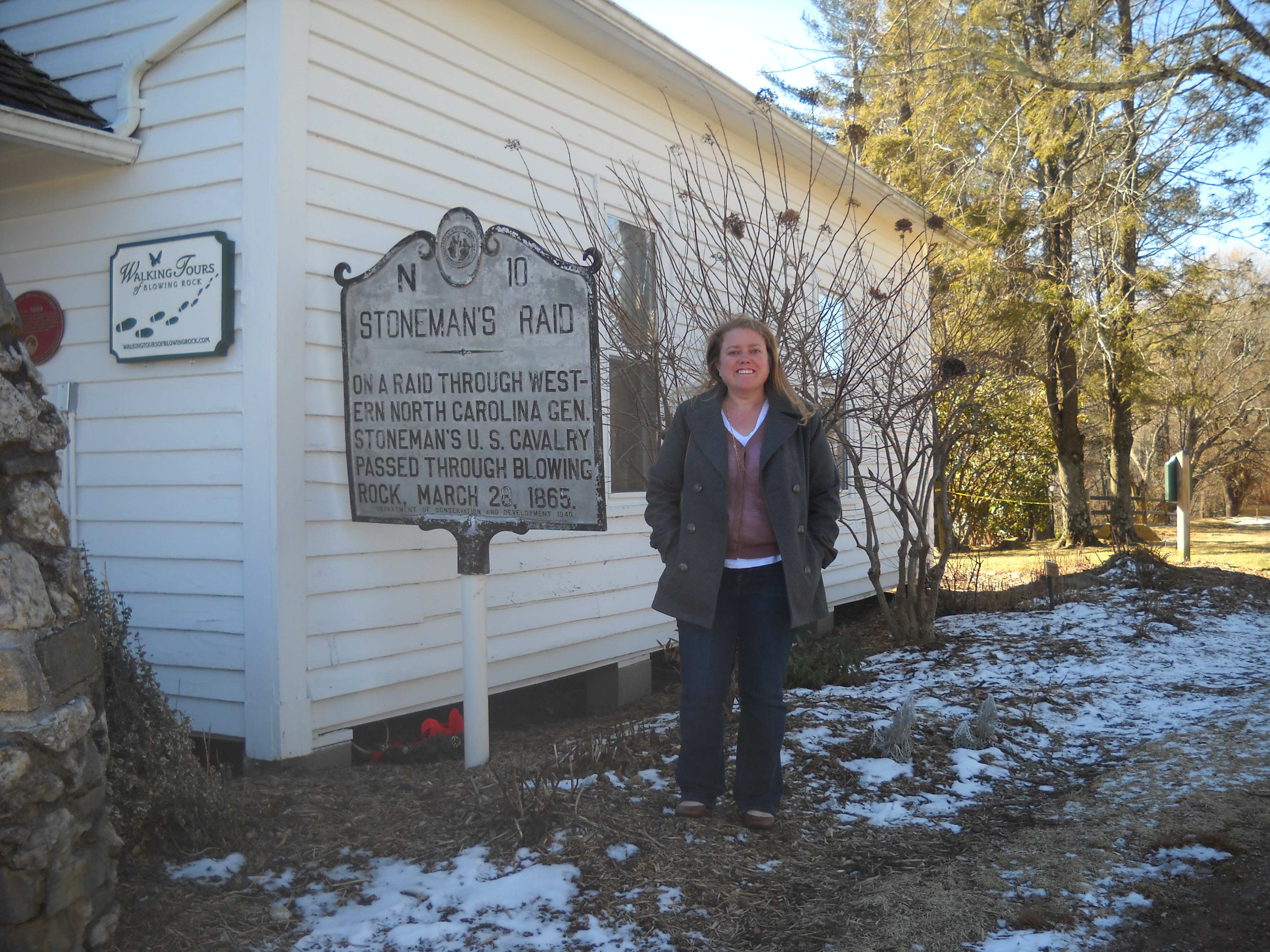
In the picturesque town of Blowing Rock, Katherine and I came upon this historical marker commemorating Stoneman’s Raid. As the Civil War wound to a close, General George Stoneman led several thousand Union soldiers on a raid through the North Carolina mountains and up into Virginia. Katherine’s great-great-great-grandfather, Seth Freeman, a product of these mountains, participated with General Stoneman in this notorious raid so it only seemed right to get her picture next to the marker.

Just as my feelings about western North Carolina are conflicted, so is much of its history. Katherine’s ancestors from the same county fought on different sides in the Civil War and in many ways the battle lines that were drawn then still play out today. There are lots of mountain counties left for me to visit, meaning that I look forward to plenty of chances ahead to sort out the complex emotions that this part of our state evokes in me.
January 20, 2014, County #21 – Watauga
DSCN3016

Whatcha See Is Whatcha Get

Like every place, New Hanover County is shaped by its past.  I’m embarrassed that it wasn’t until fairly late in life that I learned about an integral part of New Hanover’s history.  I grew up thinking of New Hanover County as the home of the graceful Southern city of Wilmington, the battleship USS North Carolina, and several sunny beaches.  It was only later that I learned the ugly story of the infamous insurrection by white supremacists in 1898, an uprising that drove elected populist officials from office, murdered black citizens, and forced hundreds of black residents from the city.

This horrific incident still resonates but, for most North Carolinians, New Hanover County today calls up images of sun and fun and relaxation.  Home to Wilmington, beaches, an aquarium, and even an east coast film industry, New Hanover County is a destination for Tar Heel families.

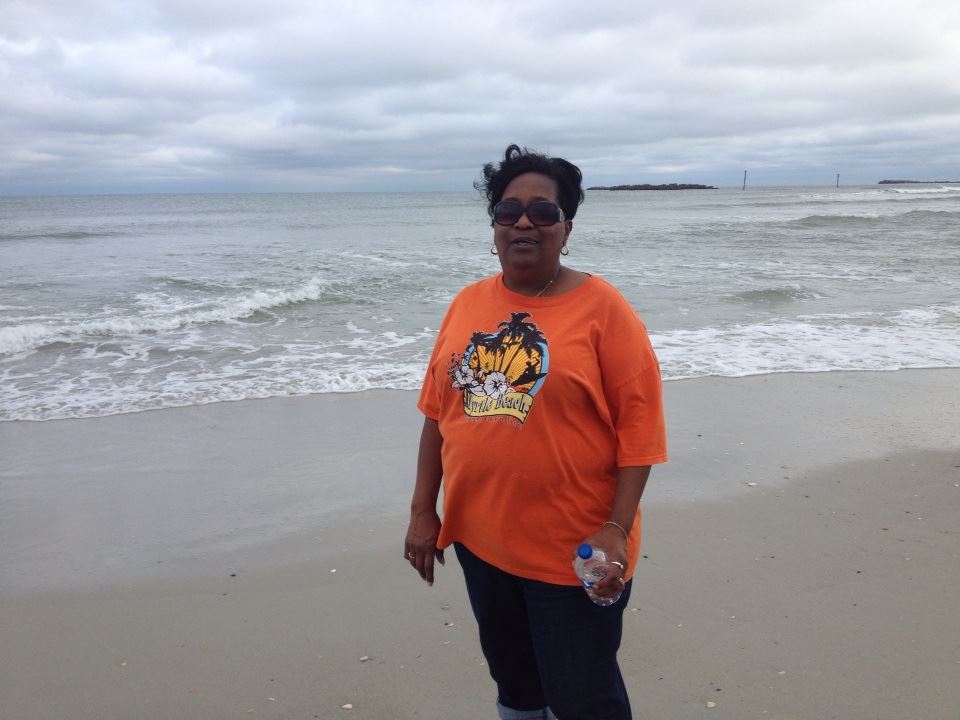
For my long-time friend, Mary Ann, New Hanover’s Wrightsville Beach is the place she heads every October to celebrate her birthday at the beach house belonging to one of her oldest friends.  This house, old and creaky and unvarnished, is everything a beach cottage should be.  Several times, I’ve had the privilege of going along with Mary Ann on one of her annual birthday trips.  On this year’s visit, the skies were overcast and the temperatures were cool but the ease of old friends being together in a restful and timeworn house, the rhythmic sound of ocean waves breaking in the background, made it all worthwhile.

Mary Ann and I go way back and we have been through good times and bad together.  Friendships and houses and communities, all are informed by the past.  When things appear perfectly pretty and pristine, I feel a little uneasy about what may lie beneath the surface.  With old places and old friends, there is a comfort in knowing that what we see is what we get.

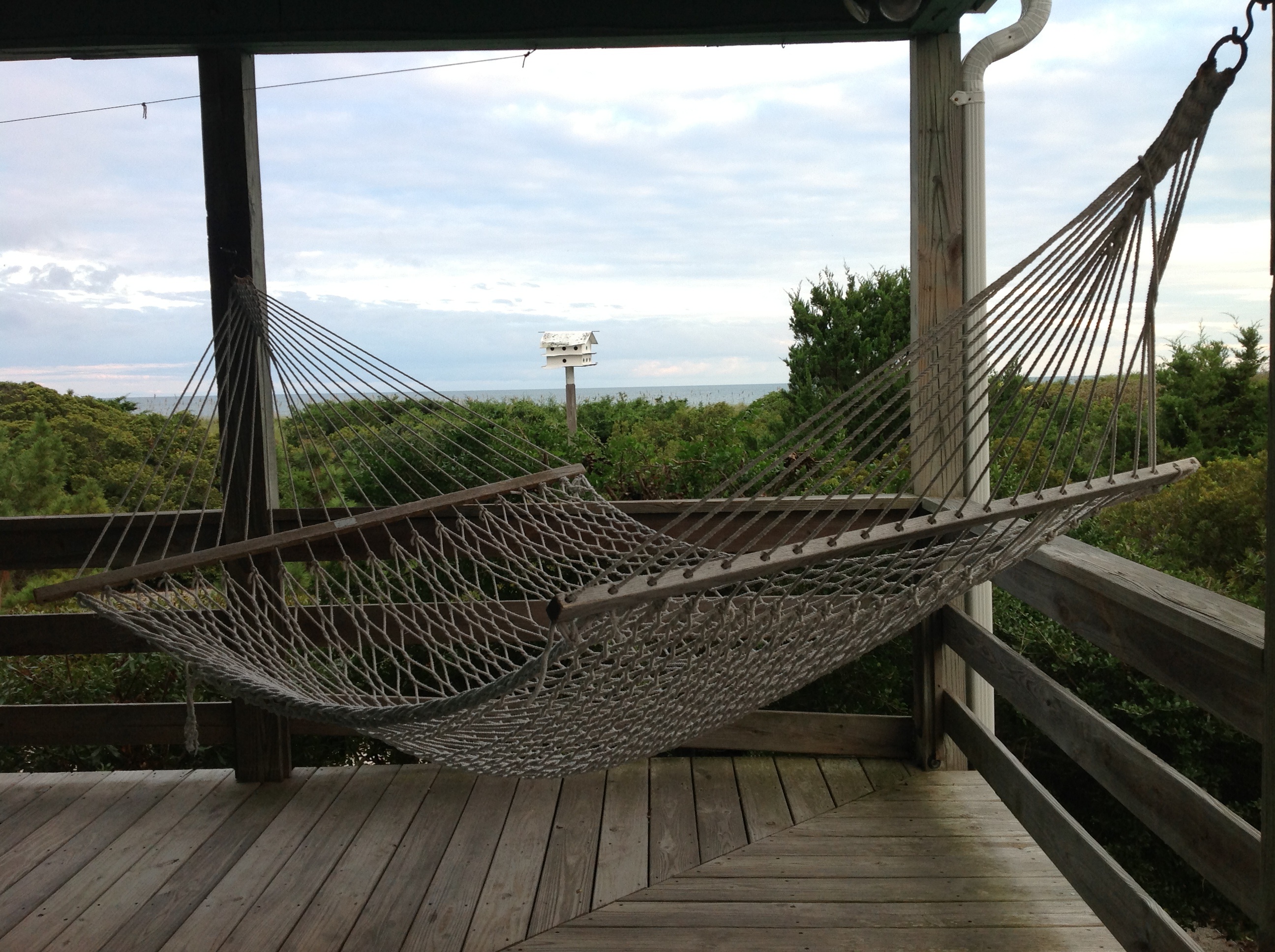
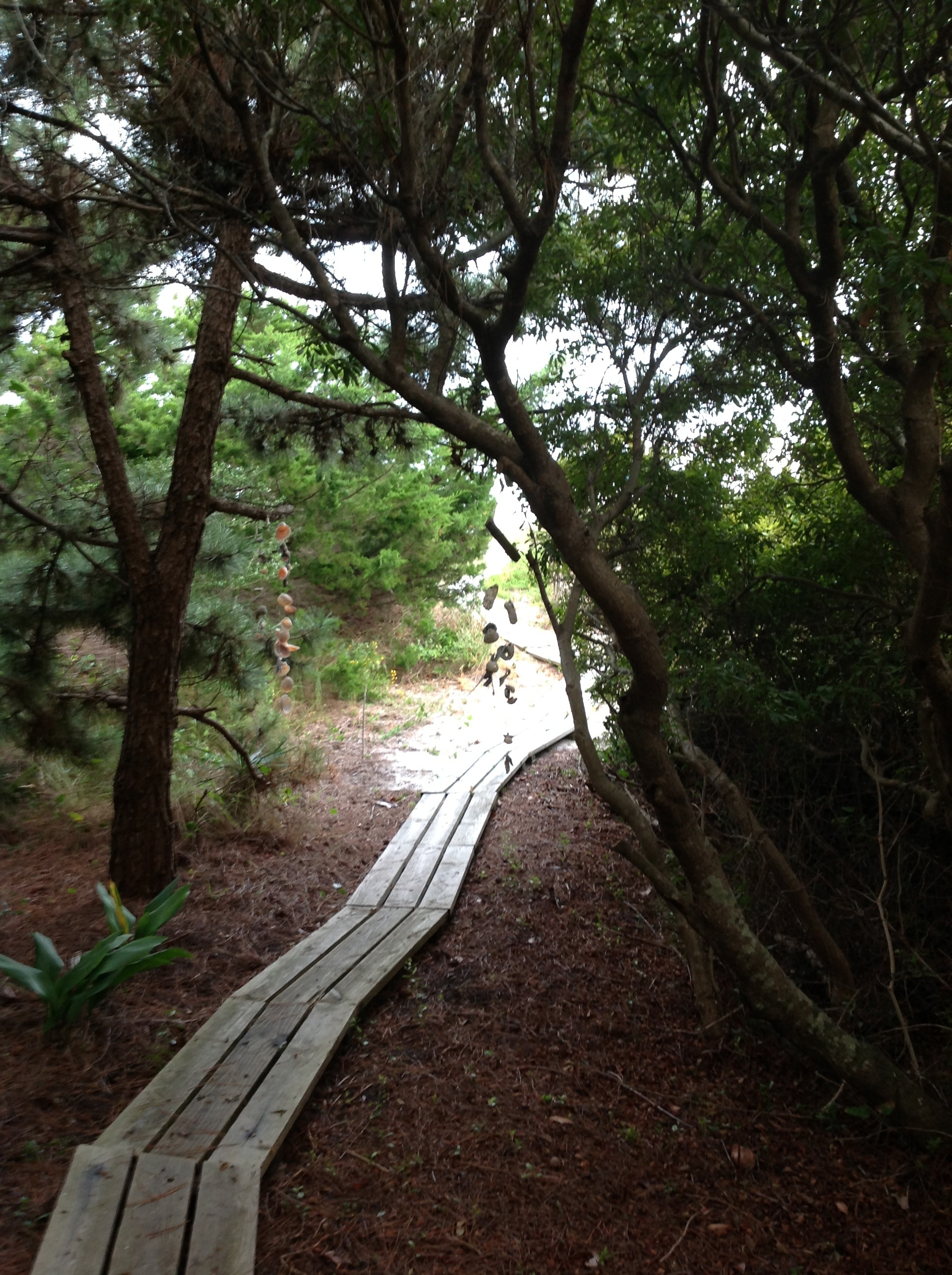
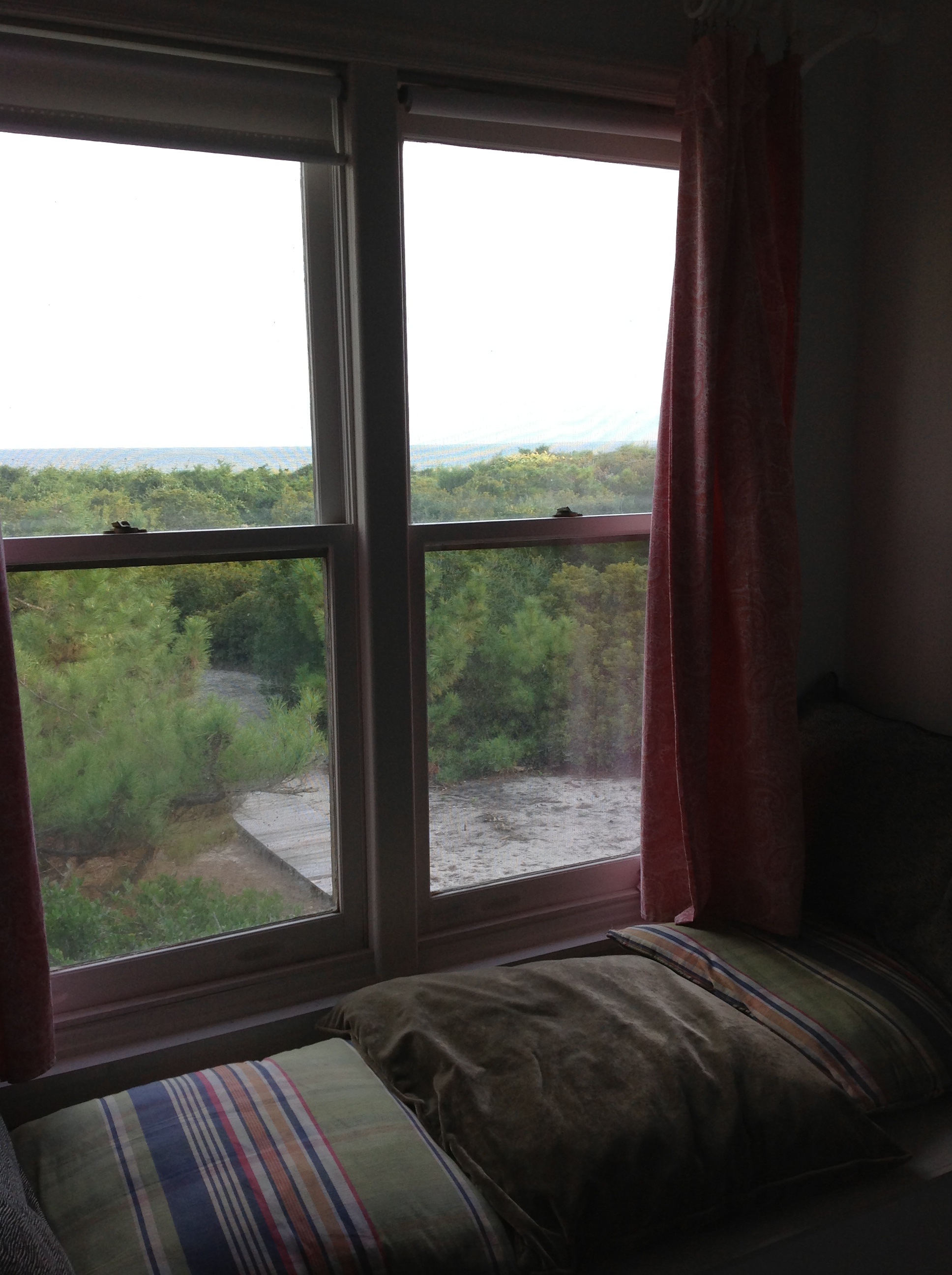
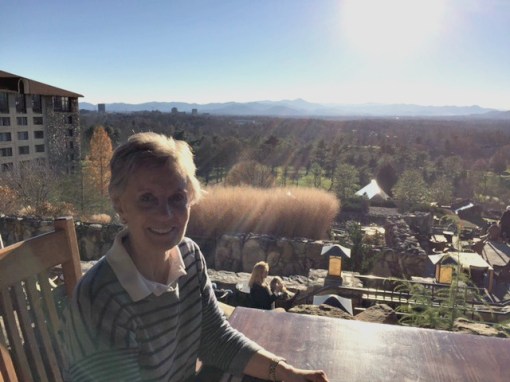
A big rope hammock on the porch, comfortable furniture inside, a magical walkway to the beach, a window seat with an ocean view, a good friend – here is just about everything I need for a relaxing October trip to Wrightsville Beach.

October 10 – 14, 2013, County #20 – New Hanover

imageimageimageimageMary Ann

Not One Step Back

Moral Monday3photo[1]Wake protestMoral Monday

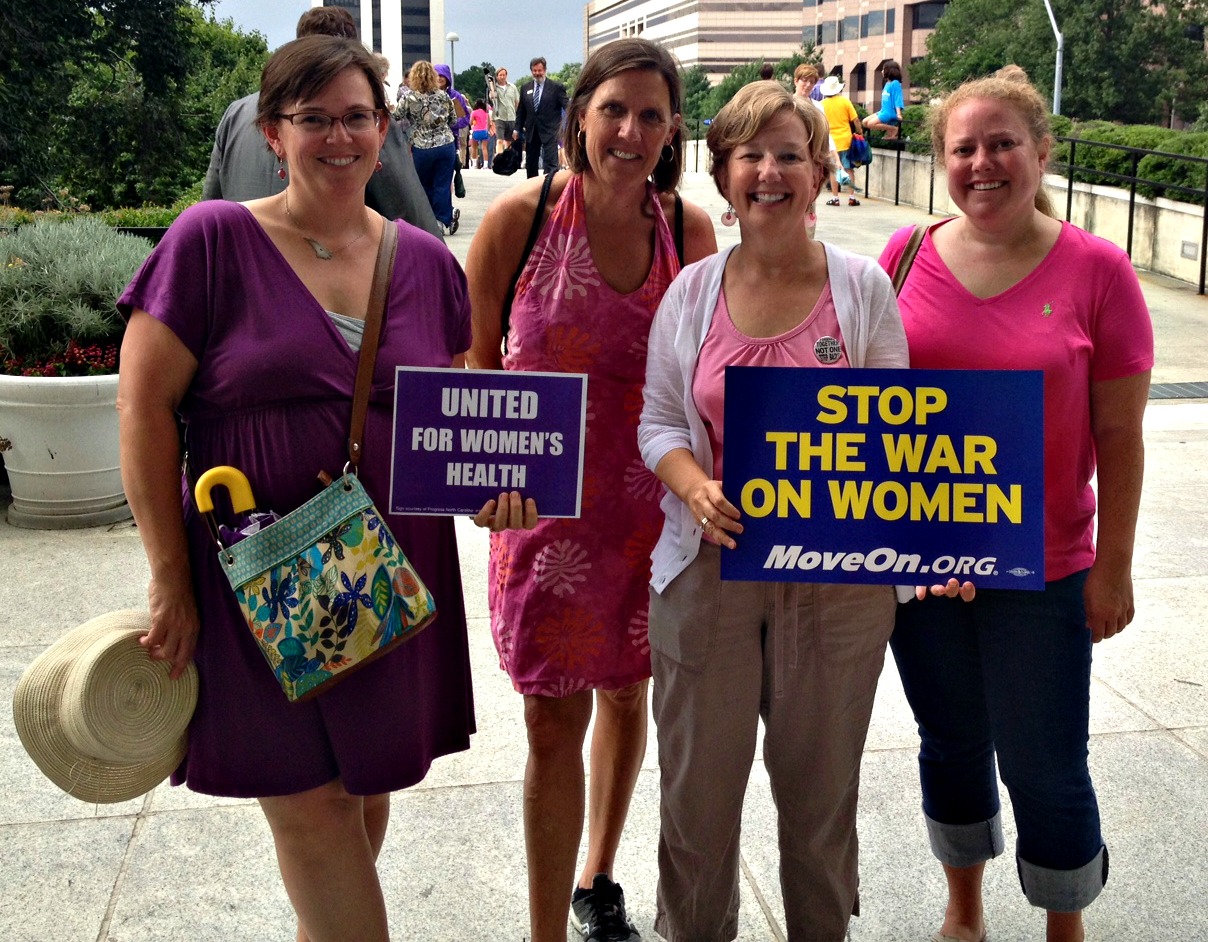
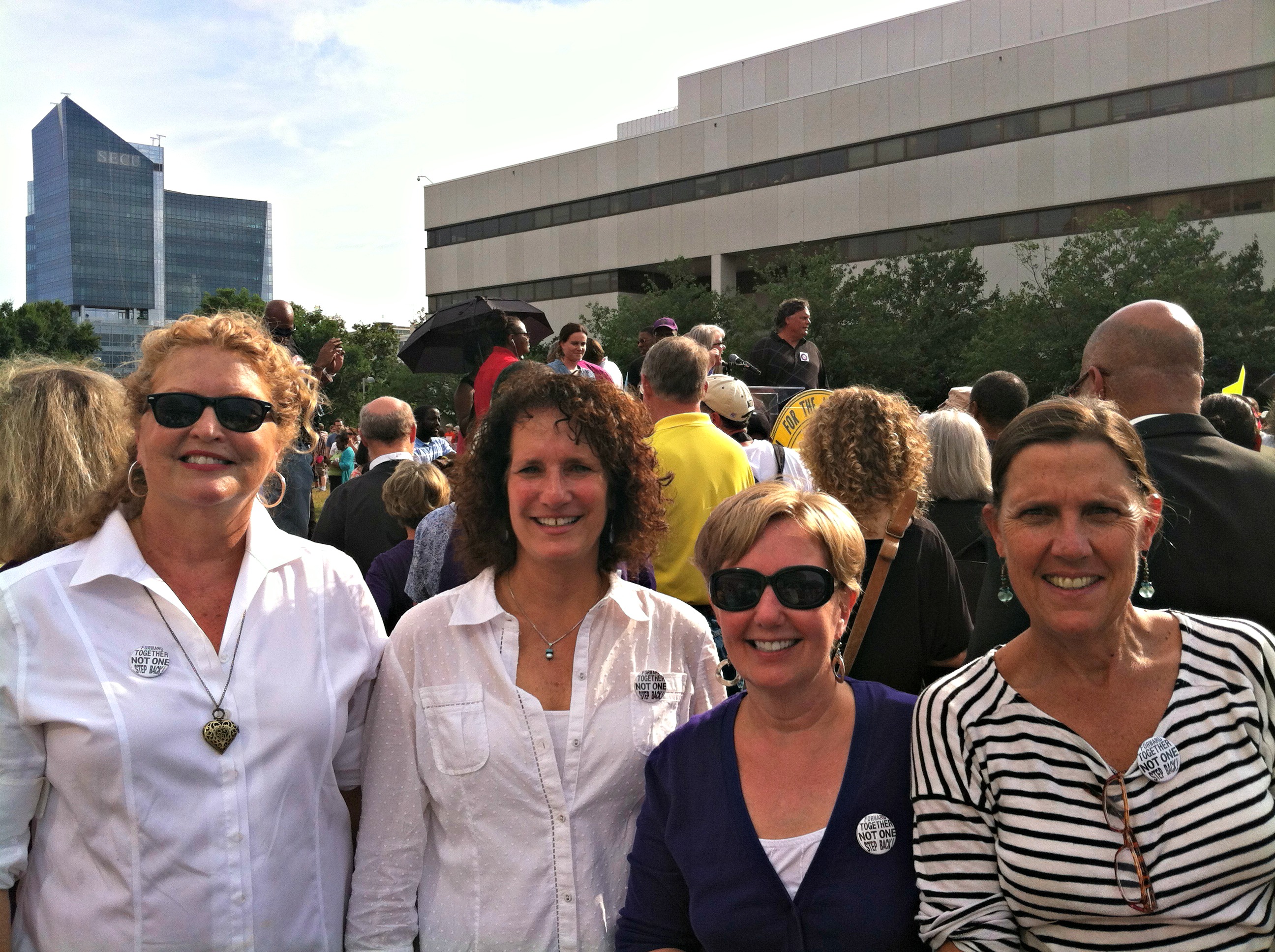
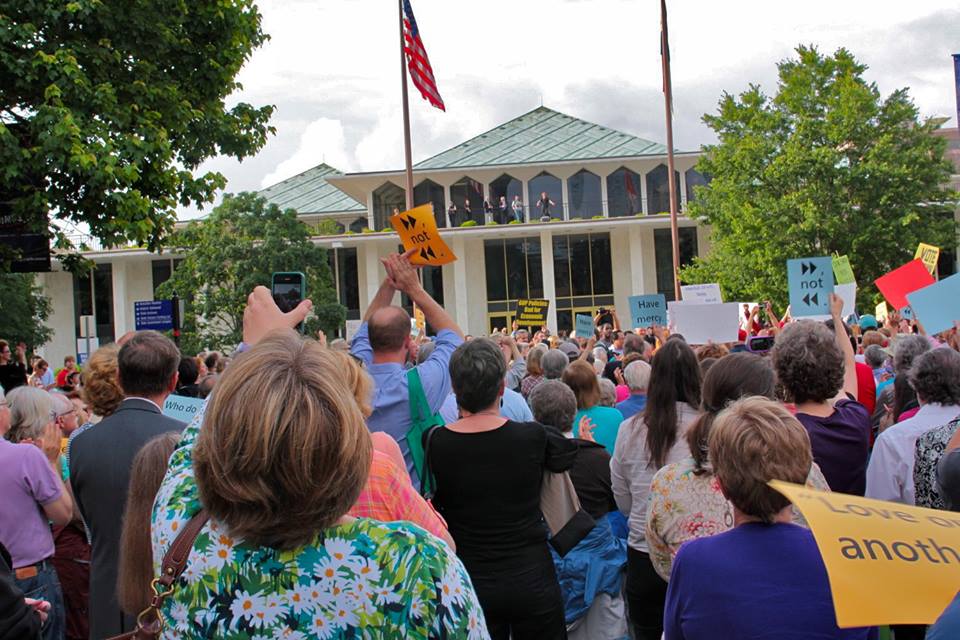
Dressed in pink, standing in the rain, broiling under a Southern sun, accompanied by family and friends, Monday after Monday, I traveled to the legislative building in Wake County to take a stand against a state legislature that seemed bent on driving my beloved state into a dark, repressive era. The Tar Heel state is better than this. I have faith that we will once again move forward together.

Moral Mondays, the summer of 2013, County #19 – Wake

Rollin’ on the (Dan) River

DSCN2547Not being blessed with athletic abilities or coordination skills, I find any activity that requires much of either to be a nightmare. Things that seem like great fun to other people – dancing! skiing! playing tennis! – are nothing but an exercise in frustration for me. Probably as compensation for all of my physical deficiencies, I’ve taken a special pride since I was a little kid in my sincere belief that I am a superstar in the art of floating.

The rest of you may be able to hit a tennis ball or clap in time with ease but, hey, when it comes to keeping myself afloat in the water, I’m a champion. Looking back, I have to wonder if the adults in my life were going for a 1950s-style version of self-esteem building for children. “Look how Barby can stand on her head in the water! Look at Pam’s strong back stroke! Whoa, look at Susie float!” If they weren’t actually as impressed as I imagined but just trying to boost my ego, it worked because I still feel a sense of pride in my ability to float for long stretches.

An inherent part of my nature is to “go with the flow.” It’s possible that my love of floating is a reflection of my personality and my tendency to let the fates carry me where they will. Whatever the reason, bobbing along peacefully on a raft is my idea of heaven.

For all of the hours I’ve spent floating in the ocean, I’d never tried river tubing until June 15th, the day after I turned 60, when my daughters and I set out for the Dan River in Rockingham County to celebrate my milestone birthday with a fun new experience. It’s been a stormy summer in North Carolina and a particularly severe weather system came through the Piedmont just a couple of days before our adventure. Driving to our destination, we passed many downed trees and overheard some locals at a convenience store complaining that their power had yet to be restored. If we’d been a little more experienced with rivers, we might have realized this was a clue that our river ride was going to be less placid than we were expecting.

My easy-going nature can be both a curse and a blessing. When we started down the river in our individual tubes, my daughters expressed concern that it was difficult to avoid large tree branches or to steer away from the steep banks. I scoffed at their worries figuring that, if there were any real dangers, someone would have warned us. As it turned out, this was an occasion when we would have been better served if my don’t worry, be happy attitude consisted of a little less being happy and a little more worrying. With the water much deeper and more rapid than usual, a series of scares and mishaps turned the peaceful float we were expecting into a hair-raising experience. After getting grounded on sharp rocks, dunked into water over my head and separated from my tube, and then tangled in a maze of branches and vines, I was just grateful we survived.

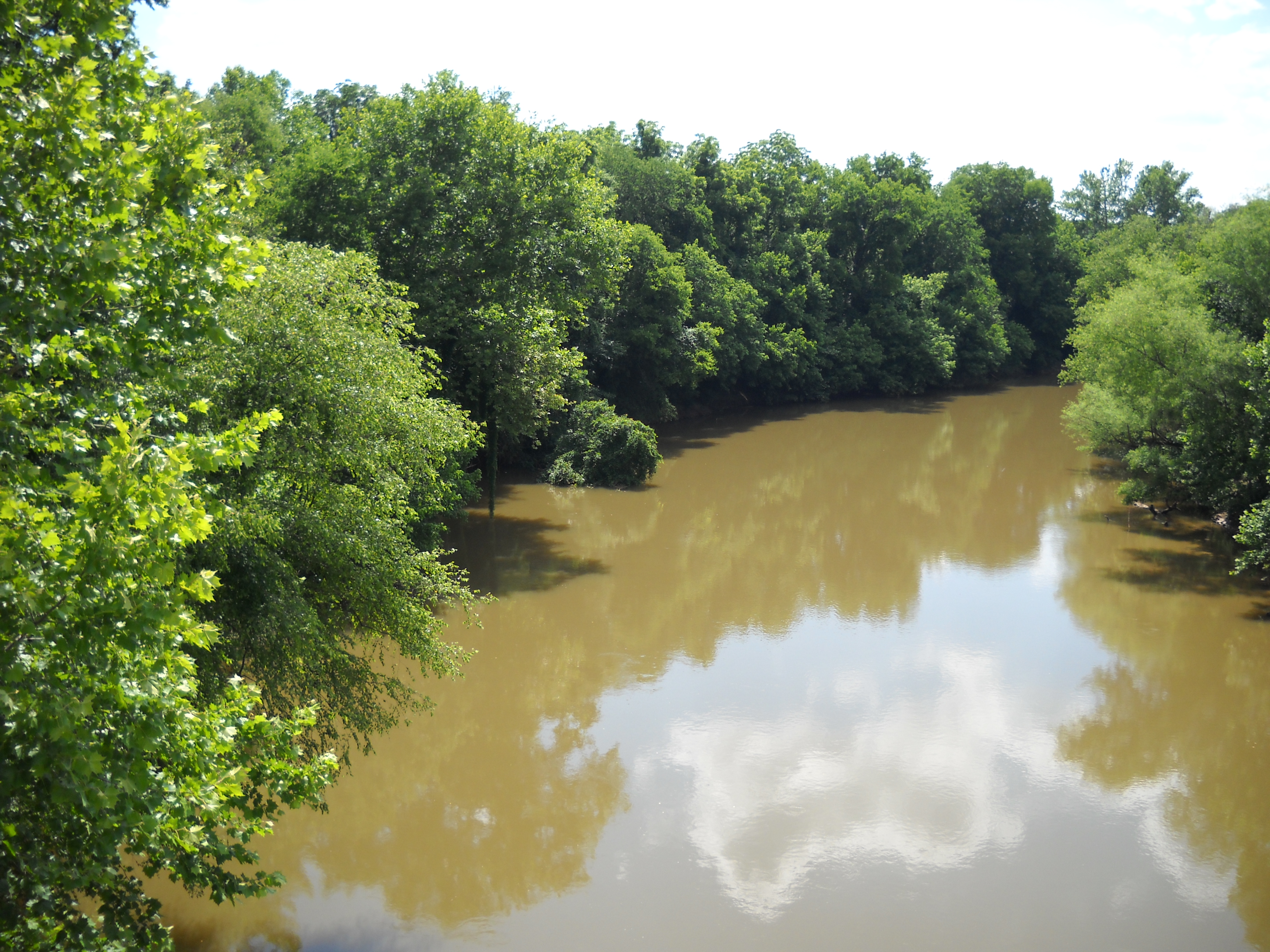
Rockingham County itself was beautiful…and so was the Dan River when viewed from afar.

June 15, 2013, County #18 – Rockingham

Take Me Out To The Ballgame

Durham is Chapel Hill’s near neighbor and a place that has a long-standing love/hate relationship with my hometown. When I was growing up, Durham was a gritty manufacturing city. Driving into its downtown to shop for back-to-school clothes, there was no doubt as to what was manufactured there as the smell of tobacco permeated the streets. When we were kids, we took field trips to Durham’s cigarette factories and received complimentary packs of four cigarettes each “to take home to our parents.”
Durham has gone through several incarnations since then and has various claims to fame – a couple of universities, a historically thriving black middle class, medical centers – and today it is considered the hip and happening place in the Triangle area, especially by its own residents. Durham boasts several venues that go by acronyms that I have a hard time keeping up with, acronyms like DBAP, DPAC, or DBAD, and I know one of those refers to the ballpark where the Durham Bulls play although I never can quite remember which one. Ever since the movie Bull Durham emerged as a cult classic, going to see the Bulls has been one of the most hip and happening things of all for a person to do in trendy Durham.
As someone who is neither particularly hip nor happening, I’ve rarely been to see the Bulls play but I do get a thrill out of watching my beloved Tar Heels win an ACC championship which means I had a big time with my daughter Katherine at the ball park in Durham on May 26th as UNC beat the Hokies of Virginia Tech to claim the ACC crown. Note the Lucky Strike tower in the background of the photo. Durham has capitalized well on its tobacco past and is enjoying its current incarnation while I am left mildly curious as to what its next one will be.
943239_10200934440430703_822382686_n

May 26, 2013, County #17 – Durham

Signs, Signs, Everywhere Signs

When I was growing up in the 1960s, my family went on several long road trips from North Carolina to my parents’ home states of Louisiana and Texas. Having come of age in the Jim Crow South, both my mom and dad were ardent supporters of the civil rights movement and those trips through the segregated South offered plenty of teachable moments for my sisters and me. One that has stuck with me for many years was a sign welcoming us to the small city of Greenville with the words “The Blackest Land, The Whitest People.” That was such blatant racism even for those times that I never was able to quite forgive the city for it. As the years went by, whenever I heard anything positive about Greenville, SC, I would think to myself self-righteously “apparently that city’s overt racism has been forgotten.”
Not long ago I met a young woman from Greenville and, knowing she was young enough to have been born long after that sign had come down, I told her about it. She was surprised to have never heard of it and then got a puzzled look on her face saying, “The weird thing about that is that the soil in Greenville isn’t black at all, it’s red clay.” That made me curious so I turned to trusty Google and, lo and behold, discovered that the infamous sign had hung in Greenville, TEXAS, not South Carolina. All my life I’d been holding those words against the wrong town!
Ku Klux Klan Billboard and Segregated Cemetery
All of that brings me to my trip last weekend to the sixteenth county in my quest, Johnston, a place that was known in the middle of the last century for a shameful sign of its own. Fairly or unfairly, when I was a child, my friends and I associated Johnston County and the town of Smithfield with the hateful Klan sign that welcomed people to the town of Smithfield with the words “Help fight communism and integration!” As I grew older and came to know people from Smithfield, I also came to understand how painful that association was for them and how helpless they had felt to do anything about a sign they didn’t endorse. That sign has been gone now for many years but some of the people who erected it and some of those who opposed it must still be living in the area – that past is not, after all, so far away.
Today if you mention Smithfield, people are most likely to think not of a KKK sign but of outlet stores or Smithfield’s Chicken & BBQ. I was more interested in trying to discover what it is that makes Johnston County tick in 2013. This trip was notable because I had my favorite traveling companion of old along for the ride, my husband Ron. Unfortunately he’s not much for car rides any longer so this may have been his one and only county trip and he was not impressed. It’s true there wasn’t a lot happening in downtown Smithfield on a Saturday afternoon but I was surprised to discover an open welcome center in the original First Union building downtown, complete with exhibits and a genealogy library (as a member of the Chapel Hill Historical Society board and a Chapel Hill resident who loves my hometown, I think it’s a shame that Chapel Hill doesn’t have something similar to welcome visitors). Walking through town to the Neuse River, I was entranced to come upon a wedding in progress. Then as we drove out of town, we passed a house decorated for a birthday party and, just down the road, a burial taking place. Johnston County’s much-maligned sign from the past is long gone and in its place I saw instead signs of birth, marriage, and death, signs that life goes on. River wedding
May 25, 2013, County #16 – Johnston

Get ‘Em From the Peanut Man

DSCN2500There are more students enrolled at the University of North Carolina in my hometown of Chapel Hill than there are residents of Martin County. A sparsely populated, rural county that people pass through on their way to and from the Outer Banks, Martin County is not a place renowned for its tourist attractions. That’s okay by me though because Martin County has a claim to fame that is good enough for me – Mackey’s Ferry Peanuts. Not only do they sell peanuts of all varieties at Mackey’s Ferry, they also have the only wine I care to drink, scuppernong wine. It was just a brief stop on my way back from the beach, but I returned home with some lasting and tasty memories of Martin County.
May 10, 2013, County #15 – Martin

These Are The Good Old Days

DSCN2419

Have you ever stopped to think about how funny it is that, no matter how many years we’ve lived, we invest our childhoods with some sort of magic that is missing from all our other decades?  After all, how often do people sit around feeling nostalgic about how they lived when they were in their 30s? When I first heard people fondly recalling the 1980s, I was so confused – for me as an adult during that time, nothing made that decade particularly stand out. Finally I realized though that, if those were your formative years, snap bracelets and Garbage Pail kids assumed an importance for you that was lost on the rest of us cruising through those Reagan years as adults.

Spending time at the Outer Banks a couple of weeks ago brought all of this to mind. I only visited Nags Head and the beaches north of there a couple of times when I was young because, from Chapel Hill, the beaches near Morehead City and Wilmington are much closer. Still, the Outer Banks have a mystical appeal for any North Carolina resident so it’s easy enough for me to get misty-eyed remembering how they used to be even if I myself spent little time there when I was young.

There have been plenty of changes to the Outer Banks since my youth and, when I arrived on a sunny day in May, I immediately found myself irritated with all of them. I was looking for dumpy, turquoise-colored motels with leaky air-conditioning units in the windows, beach houses with torn screens on their wide porches, and weather-beaten restaurants with plates full of fried, beige food. Today too many parts of the island are manicured and new. The further north you go along Highway 12, the more you feel like you’re in some sort of Yankee resort town where no one’s ever heard of Sun Drop.

When I climbed to the top of the Currituck Lighthouse in the northernmost part of Corolla, I walked all the way around the circumference of the lighthouse looking for a view worthy of a photograph.  I was annoyed that, in every direction, all I could see were signs of development. I was seeking a picture of pristine, unsettled land and blue waters but from every angle there was no view untouched by humankind. In frustration, I went ahead and snapped some pictures.  It was only later when I sat down to look at the photos that I was able to see the beauty in those views. That’s when it hit me that I was failing to appreciate what had been right there in front of me. After all, the Outer Banks of the 1960s surely appeared overdeveloped to the old timers of those days. And long before that, what must the Native Americans have thought of the changes Europeans brought to the area?  We are, after all, always living in someone’s good old days.DSCN2425

In the end, I was able to convince myself to appreciate what we have right now in front of our eyes, the beauty and grandeur of the Outer Banks, 2013 version.

Heading home from the Outer Banks, I stopped off on Roanoke Island in Dare County, home of the Lost Colony.  Hasn’t every North Carolina school child been consumed at some point in time with the mystery of the Lost Colony and that titillating image of John White returning to Roanoke Island in 1590, only to find the settlers he’d left behind gone, leaving nothing but the word “Croatan” carved on a post?  The unanswered question of what happened to those colonists is number one on my list of top five mysteries I’d most like to solve.  I didn’t find any answers wandering the national park established at the approximate site of that first settlement but I did learn about a part of North Carolina history they didn’t teach at Phillips Junior High in 1965. 

At the start of the Civil War, Union troops captured Roanoke Island.  As word spread that Yankees were in charge, several thousand slaves escaped to the island, eventually establishing a community, the Freedmen’s Colony, with roads, churches, and a school.  Throughout the war, the former slaves lived there as freedmen, working for pay, and seeking education for themselves and their children.  After the war, the land was returned to its original owners and the community dispersed, although some of the residents remained on Roanoke Island where their descendants still live today. 

Just imagine the conversations among the people who were once children in the Freedmen’s Colony when they got together to reminisce!  It wasn’t Garbage Pail Kids they’d wax nostalgic about but the memory of an entire community that rose from nothing and then disappeared.  Even with the promise of those years gone and replaced with the cruelties of the Jim Crow era, I had to hope that those former freedmen’s colonists too found joy in the grandeur of the Outer Banks, 1913 version.

With thoughts of days gone by swirling in my head, I headed off Roanoke Island, stopping first at Manteo’s beautiful waterfront, thriving thanks to tourism dollars.  There I got one of the best cups of coffee I’ve ever had at The Coffee House and then, well-caffeinated, headed west towards home. 

DSCN2494
May 10, 2013, Counties #13 and 14 – Currituck and Dare